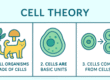

Cell- Discovery and Cell theory
1. When a muscle cell becomes multinucleated, it violates which aspect of the Cell Theory?
A. All cells arise from pre-existing cells
B. Cells are the structural and functional units of life
C. Cells function as autonomous units
D. All organisms are made of one or more cells
Answer: C. Cells function as autonomous units
Explanation: Striated muscle fibres are syncytial — multiple nuclei in one cytoplasm, acting as a single coordinated unit.
2. Which of the following best explains why viruses are considered at the borderline of life?
A. They contain both DNA and RNA
B. They reproduce only inside living cells
C. They have cell membranes
D. They respire anaerobically
Answer: B. They reproduce only inside living cells
Explanation: Viruses lack metabolic machinery; they become active only within a host.
3. The largest single-celled organism Acetabularia contradicts which principle of the cell theory?
A. All organisms are composed of cells
B. All cells arise from pre-existing cells
C. Cells are microscopic structural units
D. Cells are functional units
Answer: C. Cells are microscopic structural units
Explanation: Acetabularia is a unicellular green alga up to 7 cm long.
4. A student observes a long, multinucleated filament of Vaucheria. Which part of the Cell Theory is challenged here?
A. Cells always arise from pre-existing cells
B. Living organisms are made of discrete cells
C. Cells contain genetic material
D. Cells are the basic units of function
Answer: B. Living organisms are made of discrete cells
Explanation: Vaucheria is coenocytic — continuous cytoplasm with multiple nuclei, not divided into distinct cells.
5. What distinguishes prions from viruses?
A. Lack of nucleic acids
B. Absence of a protein coat
C. Non-infectious nature
D. Presence of DNA and RNA
Answer: A. Lack of nucleic acids
Explanation: Prions are pure proteins; viruses contain DNA or RNA.
6. The concept that “organismic processes are reflections of cellular processes” was introduced by:
A. Rudolf Virchow
B. Oscar Hertwig
C. Robert Brown
D. Theodor Schwann
Answer: B. Oscar Hertwig
Explanation: In 1892, Hertwig established cell biology as a separate discipline.
7. Who first observed a living cell and what was the organism used?
A. Robert Hooke — Cork cells
B. Anton van Leeuwenhoek — Bacteria
C. Anton van Leeuwenhoek — Algae (Spirogyra)
D. Schleiden — Plant cell nucleus
Answer: B
Explanation: Leeuwenhoek (1674) observed living cells (protozoa & bacteria) using his handcrafted microscope. Hooke (1665) saw dead cork cells.
8. The most accurate definition of a cell according to modern cell theory is:
A. Structural and functional unit of life
B. The smallest unit capable of independent existence
C. The basic unit of biological organization containing genetic material and metabolic machinery
D. A microscopic body surrounded by a membrane containing protoplasm
Answer: C
Explanation: Modern definitions emphasize genetic material and metabolism—hallmarks of life.
9. Which of the following correctly differentiates Schleiden and Schwann’s contributions?
A. Schleiden → Plant cells; Schwann → Animal cells
B. Schleiden → Cell theory; Schwann → Nucleus theory
C. Schleiden → Cell organelles; Schwann → Protoplasm
D. Schleiden → Discovered cell; Schwann → Proposed modern cell theory
Answer: A
Explanation: Schleiden (1838) proposed that all plants are made of cells; Schwann (1839) extended it to animals.
10. The concept “Omnis cellula e cellula” refers to:
A. All cells have nuclei
B. New cells arise only from pre-existing cells
C. All organisms are multicellular
D. Each cell arises from non-living material
Answer: B
Explanation: Proposed by Rudolf Virchow (1855); laid foundation for modern cell theory.
11. Modern cell theory includes all except:
A. Cells contain hereditary information
B. Energy flow occurs within cells
C. All cells arise from pre-existing cells
D. All cells have a definite cell wall
Answer: D
Explanation: Animal cells lack cell walls — hence not universal.
12. Which of the following discoveries most directly contradicted the original cell theory?
A. Existence of acellular viruses
B. Binary fission in bacteria
C. Mitochondrial DNA presence
D. Endosymbiotic origin of chloroplasts
Answer: A
Explanation: Viruses are acellular yet show life-like properties; they challenge the universality of the cell theory.
13. The endosymbiotic theory modified the classical cell theory by:
A. Stating all cells arise from inorganic matter
B. Introducing concept of organelles having their own genome
C. Rejecting Virchow’s concept
D. Explaining multicellularity
Answer: B
Explanation: Mitochondria & chloroplasts have their own DNA → evidence for prokaryotic ancestry.
14. Which of the following organisms defies the principle “cells arise from pre-existing cells”?
A. Virus
B. Mycoplasma
C. Bacteria
D. Cyanobacteria
Answer: A
Explanation: Viruses are non-cellular and replicate only inside living cells.
15. Which of the following statements best represents the modern cell theory rather than the classical one?
A. All living organisms are made up of one or more cells.
B. Cell is the basic structural and functional unit of life.
C. All cells arise from pre-existing cells.
D. Cells contain hereditary information which is passed from cell to cell during division.
Answer: D
Explanation: Modern theory integrates genetic continuity (DNA) — absent in the classical version.
16. Which cellular structures provide strongest evidence for the endosymbiotic origin of organelles?
A. Ribosomes on RER
B. Circular DNA and 70S ribosomes in mitochondria
C. Double membrane of nucleus
D. Microtubules of cytoskeleton
Answer: B
Explanation: Mitochondria and chloroplasts resemble prokaryotes → independent ancestry.
17. Which of the following is not an exception to the cell theory?
A. Virus
B. Mycoplasma
C. Coenocytic algae
D. Multicellular eukaryotes
Answer: D
Explanation: Multicellular eukaryotes fully conform to the cell theory.
18. Mature mammalian RBCs are exceptions to the cell theory because:
A. They lack cytoplasm
B. They lack mitochondria and nucleus
C. They cannot reproduce independently
D. Both B and C
Answer: D
Explanation: Enucleated and non-reproductive, yet maintain cellular metabolism for limited time.
19. Assertion (A): Viruses are living organisms.
Reason (R): They contain genetic material and can reproduce.
A. Both A and R are true and R explains A
B. Both A and R are true but R does not explain A
C. A is true but R is false
D. A is false but R is true
Answer: D
Explanation: Viruses show life-like properties only inside hosts—so they’re not true living cells.
20. Assertion (A): Mitochondria and chloroplasts are semiautonomous organelles.
Reason (R): They possess their own DNA and 70S ribosomes.
A. Both A and R are true and R explains A
B. Both A and R are true but R does not explain A
C. A true, R false
D. Both false
Answer: A
Explanation: Their own genome enables partial autonomy—consistent with endosymbiotic origin.
21. Which of the following statements is not part of modern cell theory?
A. Cells arise from pre-existing cells
B. Cells carry genetic information
C. Cells can spontaneously generate under favorable conditions
D. Energy flow occurs within cells
Answer: C. Cells can spontaneously generate under favorable conditions
Explanation: This was rejected by modern biogenesis-based theory.
22. The continuous cytoplasm in aseptate fungal hyphae is called:
A. Syncytium
B. Coenocytic condition
C. Mycelium
D. Septum
Answer: B. Coenocytic condition
Explanation: Hyphae without septa form multinucleated continuous cytoplasm.
23. Which exception to the Cell Theory has both living and non-living characteristics?
A. Prions
B. Viroids
C. Viruses
D. Fungi
Answer: C. Viruses
Explanation: Crystalline outside the host (non-living), reproduce inside (living).
25. Which of the following organisms challenges the concept that each cell functions autonomously?
A. Amoeba
B. Skeletal muscle fibre
C. Paramecium
D. Chlamydomonas
Answer: B. Skeletal muscle fibre
Explanation: Many nuclei function collectively within one cytoplasm.
26. Which of the following is the smallest infectious agent known?
A. Virus
B. Prion
C. Viroid
D. Bacteriophage
Answer: B. Prion
Explanation: Prions are smaller than viruses and viroids; composed only of protein.